


“Cold extracted” means that the extra virgin or virgin olive oil was obtained below 27 °C. The oil is separated from the olive paste by centrifugation or percolation. It is not a slogan: it is an optional term defined by Delegated Regulation (EU) 2022/2104, and anyone who prints it on the label must comply with it. In this guide we look at what happens at the mill and where the 27 °C threshold comes from. Then we explain the difference with “cold pressed” and how much temperature really matters for the quality of the oil you put on the table.
In short
- “Cold extracted” refers to a virgin or extra virgin olive oil obtained below 27 °C by centrifugation or percolation: it is the technique used by modern mills.
- “First cold pressing” has the same 27 °C threshold, but only applies to traditional extraction with hydraulic presses.
- The stage where temperature matters most is malaxation, the slow mixing of the olive paste.
- Working cold helps protect aromas and phenolic compounds, but on its own it is not enough to guarantee a great oil: variety, ripeness, care in the grove and hygiene at the mill also count.
- Both terms are optional: an extra virgin oil without this wording is not necessarily processed “hot”.
Contents
- What “cold extracted olive oil” means
- Cold extracted or cold pressed: the difference
- How olive oil is extracted, step by step
- Does temperature decide quality? What the studies say
- How to check it on the label
- After extraction: filtering and storage
- Our point of view
- An oil to follow all the way to the bottle
- Frequently asked questions
- Sources
What “cold extracted olive oil” means
Until a few years ago “cold” was a rather vague expression, used in different ways by different brands. Today its meaning is set by the European rules on the marketing of olive oil. The consolidated text of the regulation states that the term “cold extraction” is reserved for extra virgin or virgin olive oils obtained below 27 °C by percolation or centrifugation of the olive paste.
Three practical points follow from this definition:
- It only applies to virgin and extra virgin olive oil. You will often find similar wording on seed oils, but this definition concerns olive oils.
- It is an optional term. No producer is required to use it. If they do, however, they must respect the temperature threshold and the method stated.
- It talks about temperature and technique, not taste. It tells you how the oil was processed, not how good it is. We will come back to this, because it is the point that causes the most confusion.
The stated aim of the regulation is exactly this: to protect buyers from misleading descriptions by setting objective criteria for terms that carry commercial weight. In practice, when you read “cold extracted” on a bottle sold in the European Union, those words have a precise, verifiable meaning.
Cold extracted or cold pressed: the difference
The two expressions sound like synonyms, and many people use them that way. For the law, though, they are two different things. The same Regulation (EU) 2022/2104 reserves “first cold pressing” for oils obtained below 27 °C from a first mechanical pressing of the olive paste, using a traditional extraction system with hydraulic presses.
| First cold pressing | Cold extracted | |
|---|---|---|
| Maximum temperature | Below 27 °C | Below 27 °C |
| How the oil is separated | Hydraulic presses, traditional system | Centrifugation or percolation |
| Type of plant | Traditional press mill | Modern continuous-cycle mill |
| Oils allowed | Virgin and extra virgin olive oil | Virgin and extra virgin olive oil |
| Mandatory on the label? | No, optional | No, optional |
In continuous-cycle mills, which separate the oil with a decanter, the correct wording is therefore “cold extracted”. “Cold pressed” has an old-world charm, but it only correctly describes oil obtained with presses. If you find “cold pressed” on an oil made with modern equipment, the right term would be the other one.
How olive oil is extracted, step by step
To understand where temperature comes into play, it helps to follow the olives from the grove to the bottle. The production manual of the FIOI Federation (in Italian) describes these main stages after harvest:
- Leaf removal and washing. Leaves, twigs and soil are removed, then the olives are washed.
- Crushing. The olives, stones included, are crushed with stone mills or metal crushers. The result is a thick paste.
- Malaxation. The paste is slowly mixed in special tanks. This is where temperature matters most.
- Centrifugation. A decanter separates the oily must from the vegetation water and the pomace (the solid part).
- Filtering. The oil is filtered to remove residues and suspended water.
- Storage. The oil rests in suitable containers until bottling.
Malaxation, the decisive moment
The CEQ Quality Guidelines (in Italian) describe malaxation as the stage in which the paste is mixed slowly to help the oil droplets join together, a process called coalescence. This way the oil separates better in the following centrifugation.
Put simply: after crushing, the oil is scattered in tiny droplets. Mixing gently makes them merge into bigger drops that are easier to separate. A little heat makes the paste more fluid and increases the yield, meaning the amount of oil extracted. Too much heat, or mixing for too long, spoils the result.
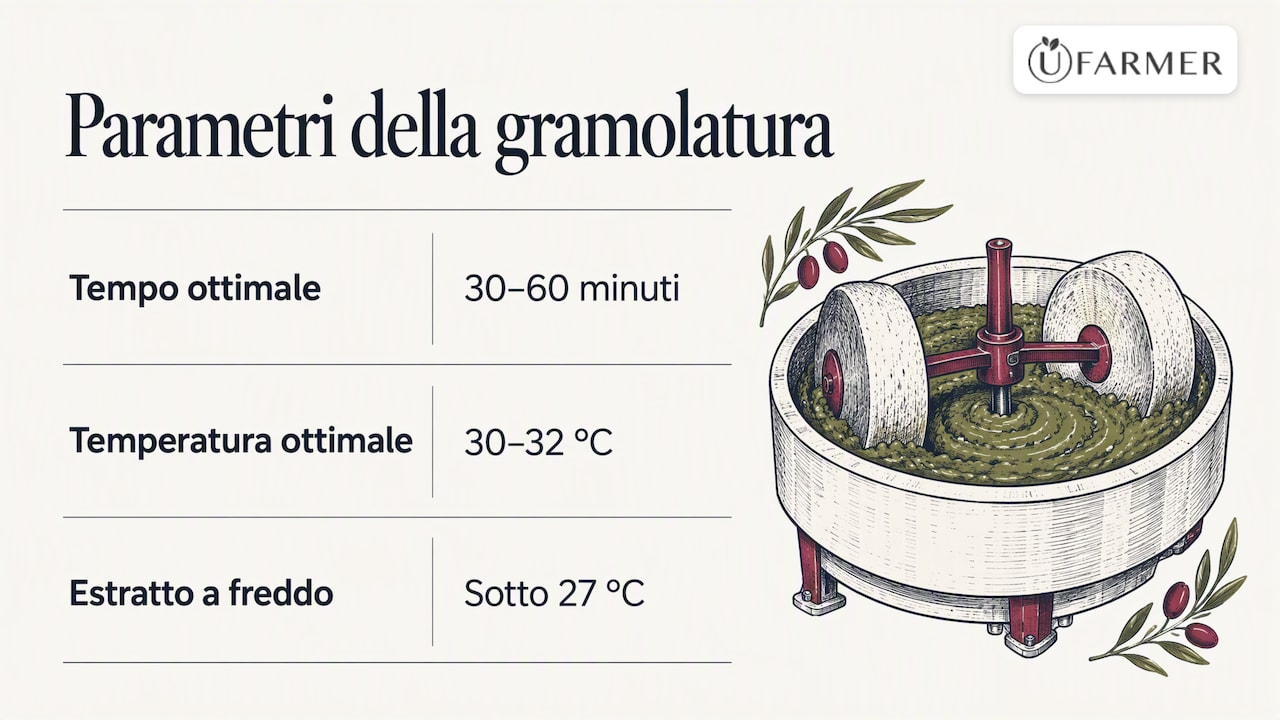
The CEQ is clear on this point: malaxation that lasts too long or temperatures that are too high can encourage oxidation reactions that reduce stability and quality, raising parameters such as acidity, peroxide value and wax content. The same guidelines indicate optimal malaxation times of 30 to 60 minutes at temperatures between 30 and 32 °C. They also point out, however, that to write “cold extracted” you have to stay below the legal limit of 27 °C.
This detail is useful: it shows you that the legal threshold and the technical quality guidance do not necessarily coincide. And that is exactly where the debate begins.
Does temperature decide quality? What the studies say
The common belief is simple: the colder, the better the oil. Reality is more nuanced, and it is worth knowing before choosing a bottle just for that wording.
What the cold protects
Temperature mainly affects two families of substances. Phenolic compounds give bitterness and pungency and are valued for their nutritional properties. Volatile compounds give the oil its aroma of grass, artichoke, tomato or almond. An article in the CNR Almanacco della Scienza (in Italian) reports that low temperatures help preserve the bioactive substances, the colour and the aroma of the oil.
Why 27 °C is not a magic wand
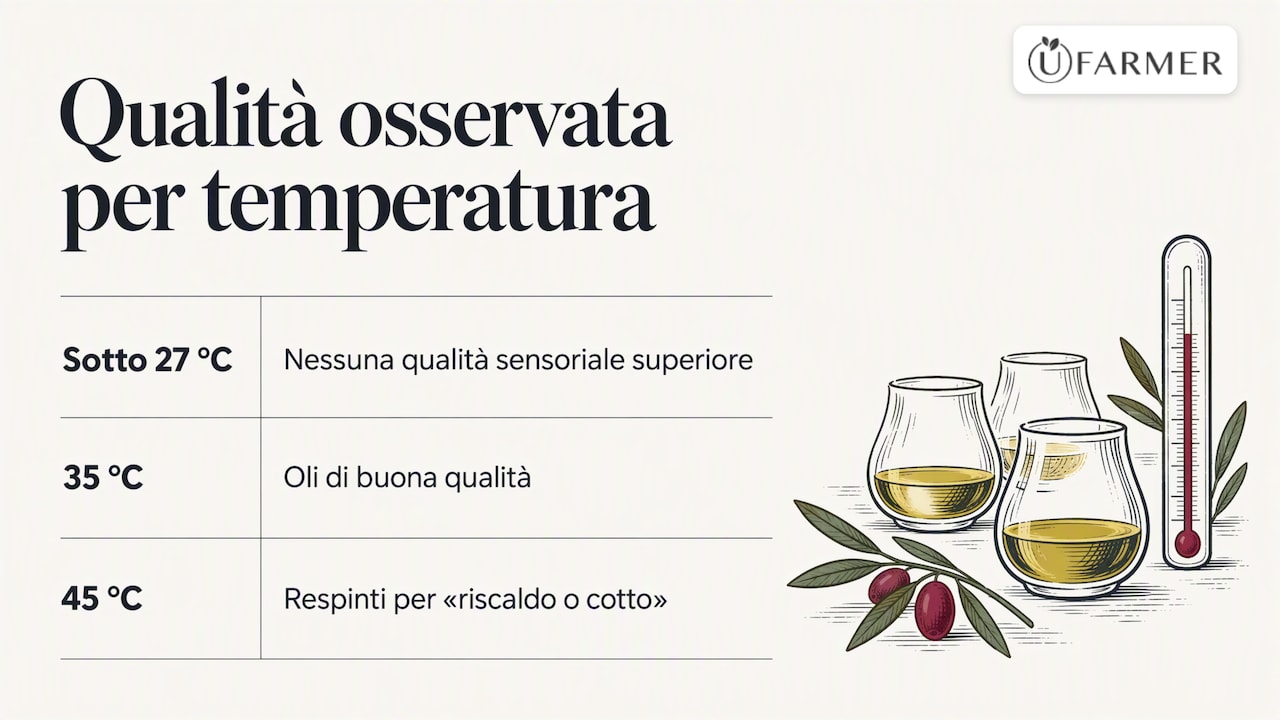
Other data call for caution. The CEQ Guidelines (in Italian) report a study in which oils obtained below 27 °C showed neither greater oxidative stability nor better sensory quality than those obtained at 35 °C. The oils produced at 35 °C were of good quality, while those produced at 45 °C were rejected for the “heated or burnt” defect.
A study published in LWT, Food Science and Technology in 2009 asked exactly whether virgin oils obtained below 27 °C are better. The authors note that the threshold for a specific label claim seemed to be based on an arbitrary commercial distinction rather than on an experimental assessment of quality. They also point out that quality depends on many factors: cultivar, ripeness, farming practices and hygiene at the mill.
Slow Food (in Italian) reaches a similar conclusion. The term shows that the 27 °C limit has been respected, but it is not an absolute measure of quality: slightly higher temperatures may not harm the oil and can even help extract phenolic compounds.
How to read all this
Putting the data together, the picture is this:
- Excessive heat does real damage. Malaxation that is too hot or too long makes the oil worse, even causing defects you can smell and taste.
- Below 27 °C you are safe on this front, but a few degrees more, well managed, are not necessarily a problem.
- Quality starts before the mill. The variety, the ripeness of the olives and the care in the grove all count, not just the thermometer.
Practical advice: treat “cold extracted” as a good sign of care, not a guarantee. An excellent extra virgin oil without that wording can be worth more than a mediocre one that displays it in large letters on the front of the bottle.
How to check it on the label
Here is what to look for when you have a bottle in your hand:
- The category. The term can only appear on extra virgin olive oil or virgin olive oil. If you read “cold extracted” on an oil of a different category, such as olive pomace oil, something does not add up.
- The exact wording. “Cold extracted” means centrifugation or percolation; “first cold pressing” means hydraulic presses. These are the only terms defined by law for the extraction temperature.
- The other information. Check the origin of the olives, the harvest year when it is stated and the best-before date. A producer who is transparent on these points is usually transparent about the rest too.
- The tasting. A fresh, well-made extra virgin oil smells green and has balanced notes of bitterness and pungency. Musty, rancid or “burnt” smells are defects, whatever the label says.
If you want to learn more about who is behind the bottle, our guide to Italian olive oil producers explains what sets a small farm apart.
After extraction: filtering and storage
The extraction temperature is only the beginning. An oil processed with care can lose quality if it is stored badly.
To filter or not
The FIOI manual (in Italian) considers filtering, with continuous cardboard filters or with filter flours, necessary to guarantee stability and quality. It prevents the fermentation caused by impurities settling at the bottom. Unfiltered oil has its charm just after harvest, but it should be used quickly. We have a separate article on filtered or unfiltered olive oil, with the pros and cons of both. The same theme comes up in this guide to Taggiasca olive oil and how to store it, a good example of how cultivar and care after the mill go hand in hand.
How to store it at home
The FIOI manual describes professional storage in stainless steel containers, often under an inert gas such as nitrogen or argon to prevent oxidation, in temperature-controlled rooms, often between 15 and 18 °C. At home you do not have a nitrogen tank, but you can follow the same logic:
- Away from light: dark bottles or tins are better, kept in a closed cupboard.
- Away from heat: never next to the hob or the oven.
- Little oxygen: close the bottle tightly and, if you buy a large tin, decant a little at a time into a smaller bottle.
- Use it: extra virgin olive oil does not improve with age, so it is best not to keep it in the cupboard for too long.
Our point of view
At UFarmer we select small Italian olive oil producers directly. We often notice that the question “is it cold extracted?” actually hides another one: “can I trust this oil?”. The wording on the label is a useful clue, but trust comes when you know where the oil comes from and who made it.
That is why we believe in adoption. When you adopt an olive tree, you follow the season through the producer’s updates: flowering, the growth of the olives, the harvest. You understand why one year differs from another, and why timing and care matter as much as the temperature at the mill. If you are curious about what comes before, our article on olive trees in spring covers awakening, flowering and fruit set.
Our advice, then, is simple: read the label, but do not stop there. Taste, compare, ask. An oil that its producer tells you about properly is worth more than any label claim.
An oil to follow all the way to the bottle
If all this technique has made you want an extra virgin oil whose whole story you know, you can adopt an olive tree from one of the producers we have selected, from €69. The adoption certificate with your message arrives instantly by email, or on the day you choose if it is a gift. During the season you receive updates from the producer and, at the end of the cycle, your extra virgin olive oil is delivered to your door according to the adoption calendar.
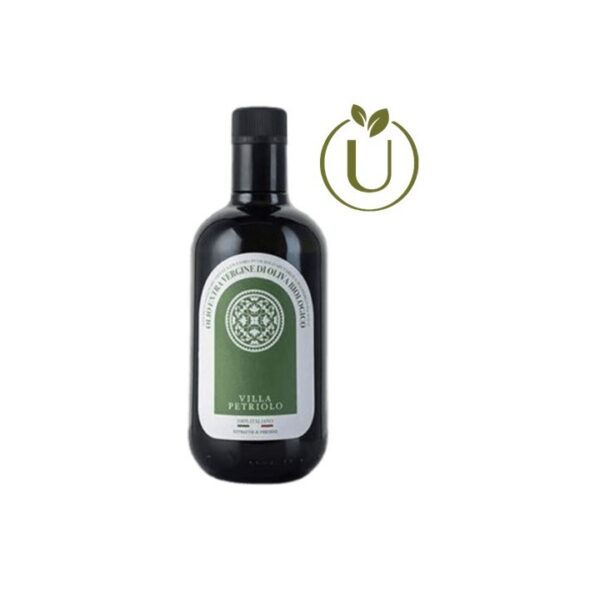
If you like, you can personalise the packaging for a fee with a vinyl message, a wooden tag or a personal label, even after purchase. Among the adoptions available you will find, for example, the IGP extra virgin olive oil from Villa Petriolo and the extra virgin olive oil from Il Merlo. Would you rather taste before choosing? Our tasting boxes introduce you to a producer, and they are also the only option that arrives before Christmas, for orders placed by 17 December. Every step is explained in how it works.
Frequently asked questions
Is cold extracted oil healthier?
Low temperatures help preserve phenolic compounds, colour and aroma, so cold processing is a good starting point. It is not an automatic guarantee, though: the olive variety, ripeness and care in processing weigh just as much. When choosing, what counts is the whole picture, not the wording alone.
Are all extra virgin olive oils cold extracted?
Not necessarily, and they do not always say so. The term “cold extracted” is optional: an extra virgin oil may have been processed below 27 °C without stating it on the label. If the wording is there, however, the threshold must be respected.
What is olive malaxation?
It is the stage in which the freshly crushed olive paste is mixed slowly so that the oil droplets join together and separate better in the centrifuge. It is the step where temperature has the greatest effect on quality. If it is too hot or too long, the oil risks oxidation and defects.
How should oil be stored after the mill?
Keep it away from light, heat and air: dark bottles or tins, a cool cupboard, cap always closed. If it is unfiltered, use it quickly, because the sediment can ferment. In general extra virgin olive oil does not improve with time, so it is best not to keep it for too long.
Are “cold pressed” and “cold extracted” the same thing?
No. Both mean processing below 27 °C, but “first cold pressing” only applies to traditional extraction with hydraulic presses. “Cold extracted” covers centrifugation or percolation, in other words modern equipment.
Sources
- Delegated Regulation (EU) 2022/2104, EUR-Lex
- Delegated Regulation (EU) 2022/2104, consolidated text of 10 June 2024
- Quality Guidelines, CEQ (in Italian)
- Extra virgin olive oil production manual, FIOI Federation (in Italian)
- Are virgin olive oils obtained below 27 °C better than those produced at higher temperatures?, LWT 2009
- Olio di oliva sì, ma lavorato a freddo, CNR Almanacco della Scienza (in Italian)
- “Spremuto o estratto a freddo”: un valore assoluto?, Slow Food (in Italian)