


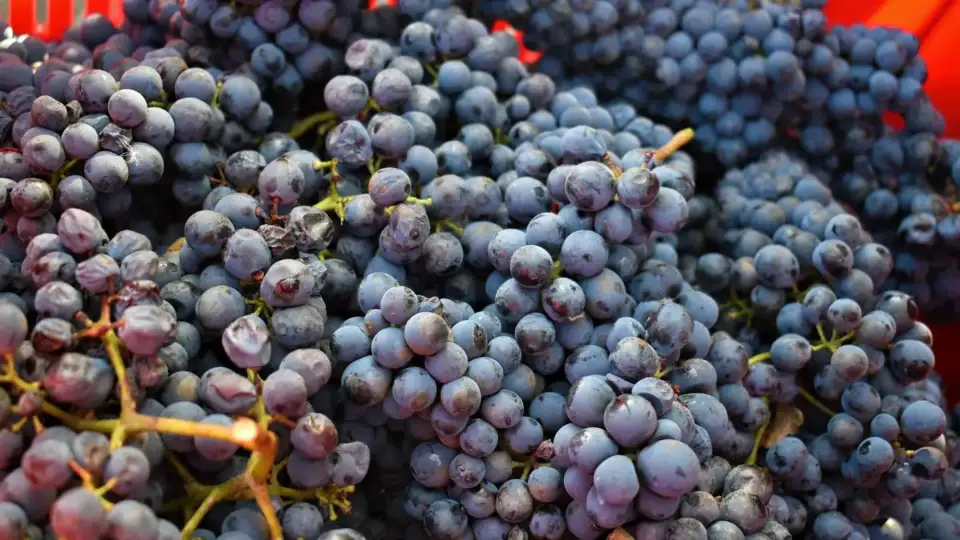
Vino novello, Italy’s new wine, is released every year at 00:01 on 30 October, in the same year as the harvest. This is laid down by the Ministerial Decree of 13 August 2012, except where the production rules of a denomination set a later date. Its season runs from the end of October to St Martin’s Day and carries on in the following months, because it is a wine to drink young. It is the first taste of the harvest that has just ended. If you like the idea of drinking “the vintage” while it is still fresh from picking, you can go one step further: adopt a vineyard from a small Italian winery, follow the season from the rows and receive your wine at home, the fruit of a year’s work.
In short
- Release date: from 00:01 on 30 October of the harvest year, the same every year. Only a few production rules set a later date, such as Lizzano rosso DOC (6 November).
- Season: it is on sale from the end of October, it is traditionally celebrated on St Martin’s Day (11 November) and it must be bottled by 31 December.
- When to drink it: ideally within the first 6-12 months, while the aromas are fresh.
- How it is made: at least 40% of the grapes go through carbonic maceration, with at least 11% vol and the vintage compulsory on the label.
- Novello and vino nuovo: they are not the same thing. Novello is a category defined by law, “vino nuovo” (new wine) is just a figure of speech.
Contents
- The release date: 30 October, every year
- The novello season: from late October to St Martin’s Day, and beyond
- How a novello is made: the rules to follow
- Novello and vino nuovo are not the same thing
- How to choose and enjoy novello
- Our point of view
- From the novello celebration to a vineyard of your own
- Frequently asked questions
- Sources
The release date: 30 October, every year
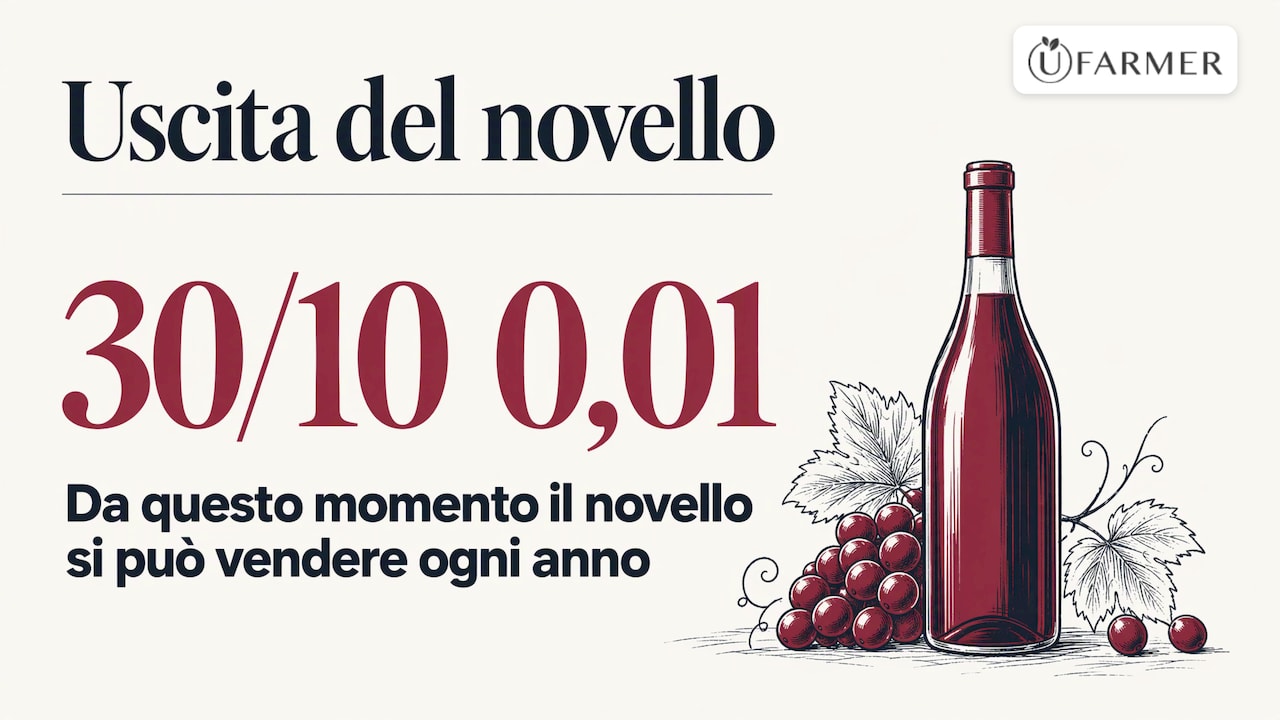
The rule is simple and does not change from one year to the next. Annex 7 of the Ministerial Decree of 13 August 2012, published in the Gazzetta Ufficiale no. 200 of 28 August 2012, sets the release for consumption of vino novello at 00:01 on 30 October of the year in which the grapes were grown. “Release for consumption” means that from that minute the wine can be sold to the public: in a wine shop, at the supermarket, in a restaurant or directly at the winery.
So the 2026 novello came out on 30 October 2026, and the 2027 one will come out on 30 October 2027. There is no need to check the calendar every autumn: the date is fixed and the only possible change is later, never earlier.
Why 30 October
For many years Italian novello came out on 6 November. The 2012 decree brought the date forward to 30 October. This way Italian novello reaches the shelves before its French “cousin”, Beaujolais Nouveau, which is uncorked every third Thursday of November.
There is a technical reason too. Novello lives on freshness, and a shared date avoids a race to get ahead with wines fermented in too much of a hurry. For the same reason the decree states that the winemaking period cannot be shorter than ten days: the winery always has a minimum amount of time to do its job well.
The exceptions: when the production rules say later
The decree allows only one exception: the production rules of a denomination can set a later date. The most quoted example is Lizzano rosso DOC, in the province of Taranto, whose production rules still say 6 November, the old national date.
Then there are wineries that choose to wait a few days beyond 30 October, releasing their novello when they feel it is ready. That is why in the first days of November it is normal to find new bottles joining those already on sale.
The novello season: from late October to St Martin’s Day, and beyond
The release date is a rule, while the “novello season” is more of a time of year. It opens at the end of October, has its most heartfelt moment on 11 November and carries on in the following months.
St Martin’s Day is not a date set by law. It is, however, the day when, in many Italian regions, novello is traditionally drunk with chestnuts. For centuries the farming calendar followed the sequence of harvest, opening of the casks and the turn of the year on the farms: it is no coincidence that St Martin’s Day has long been considered the farmers’ New Year. In practice, between 30 October and 11 November the commercial calendar opens the season and the popular one celebrates it.
After St Martin’s Day novello does not disappear. The rules only set the deadline for bottling it: it must be packaged by 31 December of the harvest year. For wine packaged by that date there is no time limit on sales, nor any obligation to withdraw it from the shelves. Wineries can also reclassify their novello wines and sell them without the word “novello”, both before and after 1 January of the following year, by updating their registers and labels.
There is, however, a limit set by taste. According to Italia.it, novello should be drunk young: the freshness of its aromas tends to fade within a year, and it is best enjoyed preferably within the first 6-12 months of its life.
| Moment | What happens | Is it a rule? |
|---|---|---|
| Harvest (late summer, early autumn) | The grapes are picked and made into wine quickly | Yes, at least 10 days of winemaking |
| 30 October, 00:01 | Novello can be sold | Yes, Ministerial Decree of 13 August 2012 |
| 6 November | Lizzano rosso DOC novello is released | Yes, under those production rules |
| 11 November, St Martin’s Day | It is celebrated with chestnuts and the wine of the year | No, it is tradition |
| Third Thursday of November | Beaujolais Nouveau is released in France | Yes, a French rule |
| 31 December | Deadline for bottling novello | Yes |
| First 6-12 months | Best time to drink it | No, it is drinking advice |
How a novello is made: the rules to follow
Novello is not “just any red wine, only younger”. To write the word novello on the label, the winery must follow a precise technique and respect the analytical limits set by Annex 7 of the 2012 decree.
- Carbonic maceration: at least 40% of the batch must be made with carbonic maceration of whole grapes. The rest can follow traditional winemaking.
- Minimum winemaking time: no less than ten days.
- Alcohol content: the minimum total alcoholic strength by volume at consumption cannot be lower than 11% vol.
- Residual sugar: no more than 10 grams per litre.
- Bottling: by 31 December of the harvest year.
- Vintage: compulsory in the description and presentation, in other words clearly visible on the label.
What is carbonic maceration
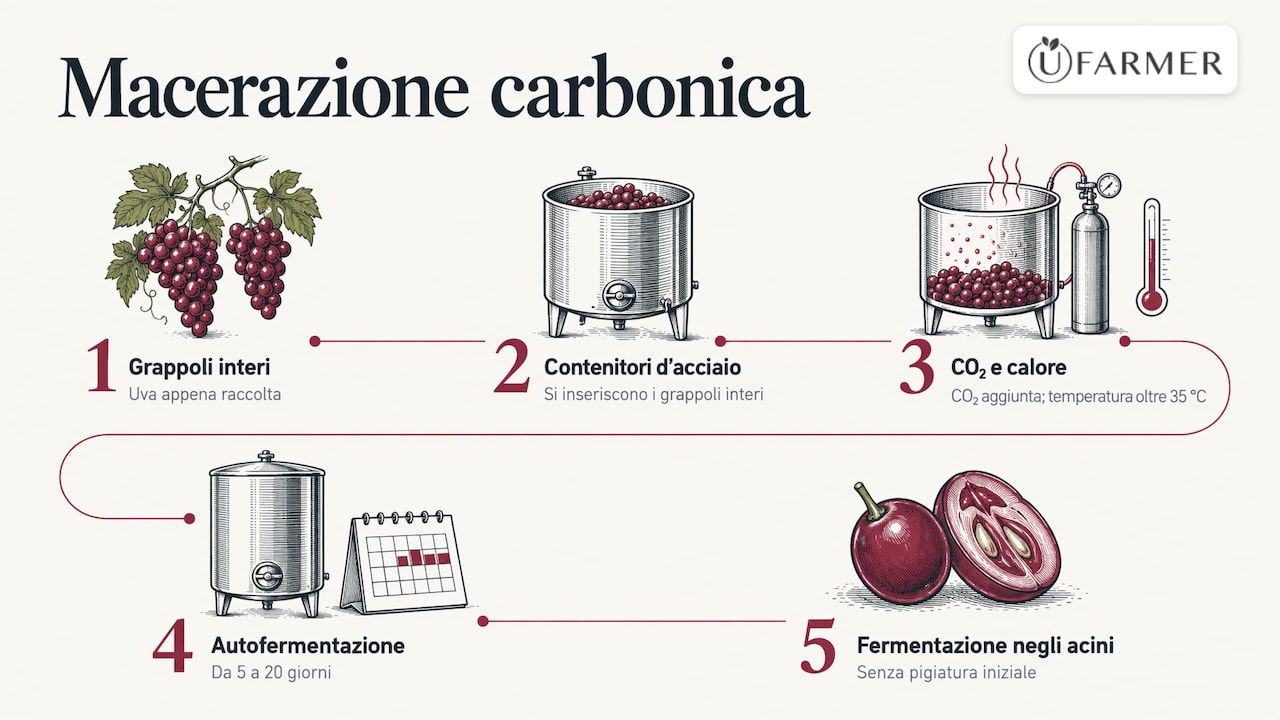
It is the heart of novello. As the Italia.it page on vino novello explains, whole bunches of freshly picked grapes are placed in steel containers, carbon dioxide is added and everything is brought to a temperature above 35°. The bunches are left to ferment on their own for a period that ranges from 5 to 20 days.
With no crushing at the start, fermentation begins inside the berries. The result is a wine with a bright red colour, fruity aromas and a velvety softness, with a trace of sweetness you can feel on the palate. Compared with Beaujolais, Italian novello has more carbonic acid, which makes it lively.
Denominations can provide for the term too. The production rules of the Toscana PDO, for example, allow red wine bottled by 31 December of the harvest year to be called “novello”, provided that at least 40% of the grapes are made into wine with carbonic maceration.
Reading the rules helps, but seeing a winery at work helps more. If you are in Milan and want to see in person how grapes become a glass of wine, a day in Franciacorta among wine and local produce takes you through vineyards and wineries.
Novello and vino nuovo are not the same thing
The two terms are often used as synonyms, but they mean different things.
- Novello is a category defined by law: a compulsory technique (carbonic maceration), a release date, requirements for alcohol and sugar, the vintage on the label.
- Vino nuovo (new wine) is a common way of referring to wine from the latest harvest drunk young, made with traditional winemaking. It is the wine that in many areas is drawn straight from the cask at the winery or bought loose in the weeks after the harvest.
As inNaturale sums up, the main difference lies precisely in the winemaking technique: without carbonic maceration, the word “novello” cannot appear on the label.
You can taste the difference in the glass. Novello is all about fruit, freshness and immediate softness. A traditional new wine often has more noticeable tannins and a profile closer to the red it will become with ageing, the period in which the wine rests in cask, in steel or in the bottle before being drunk.
How to choose and enjoy novello
Choosing a novello is mostly a matter of reading the label carefully. Here is what to look at.
- The vintage. It must be there by law. If in November 2026 you find a 2026 novello, it is the freshest one available. One from the year before is already past its best.
- The word “novello”. It guarantees the technique and the requirements of the decree. “Vino nuovo” or “vino giovane” (young wine) do not give the same guarantees.
- The denomination. DOC, DOCG or IGT tell you where the wine comes from and which production rules it followed. A denomination can also set a release date later than 30 October.
- The winery. A producer you know, or whose way of working in the vineyard you are familiar with, is the best way to find your bearings.
For pairings, tradition points to the simplest route: chestnuts, roast chestnuts, cured meats, autumn pasta and rice dishes, mushrooms. Novello is a convivial wine, to open among friends on the first cold evenings, without waiting.
A practical tip: buy novello to drink it in the following weeks, not to keep it in the cellar. It is made to be enjoyed young, when its aromas are at their best.
Our point of view
We like novello for the story it tells: the harvest that has just ended, the first wine of the year, the feast of St Martin. It is a wine that brings the season to the table.
We think that season can be experienced even more closely. When you adopt a vineyard with UFarmer, you choose a selected small Italian producer and follow the natural cycle up to the harvest thanks to the updates from the producer. At the end of the cycle you receive your wine at home.
Novello lasts a season. An adoption lasts all year: it is a gift that is opened straight away, with the adoption certificate and the dedication, and keeps on surprising month after month. For anyone who loves Italian wine, it is the most tangible way to understand what lies behind every bottle.
From the novello celebration to a vineyard of your own
November is the month of novello, and it is also when people start thinking about Christmas gifts. If you are looking for a wine-related idea that lasts longer than a dinner, with UFarmer you can adopt a vineyard from a small Italian producer from €85, or an olive tree from our olive oil producers from €69.
Here is what you receive with an adoption:
- The adoption certificate with your dedication, which arrives by email straight away or on the day you choose for the gift.
- Updates from the producer during the season, up to the harvest.
- Your wine or your extra virgin olive oil at home at the end of the natural cycle, according to the adoption calendar.
- Paid personalisations, even after purchase: vinyl lettering, a wooden tag or a personal label.
If you would rather have something to uncork during the festive season, the tasting boxes let you taste a producer’s wines: only tasting boxes arrive by Christmas, for orders placed by 17 December. You can browse the vineyards to give on the adopt a vineyard page and find every step explained in how adoption works.
Frequently asked questions
When can vino novello go on sale?
From 00:01 on 30 October of the harvest year, as set by the Ministerial Decree of 13 August 2012. Before that moment nobody can put it on the market. Some production rules, such as those of Lizzano rosso DOC, set a later date.
Does the release date change every year?
No, it is always 30 October. Only the vintage changes: the 2026 novello came out on 30 October 2026 and the next one will come out on 30 October 2027. The date can only be moved later, and only by the production rules of a denomination.
How long is vino novello available?
It must be bottled by 31 December of the harvest year, but once packaged it can stay on sale with no time limit. To enjoy it at its best, though, it is worth drinking it within the first 6-12 months, while the aromas are still fresh.
Is novello the same as Beaujolais Nouveau?
They are close relatives: both come from carbonic maceration and are drunk young. Beaujolais Nouveau is released in France on the third Thursday of November, Italian novello on 30 October. Italian novello generally has more carbonic acid and a velvety softness.
Can I give a wine of the year at Christmas?
Novello is perfect for November evenings. For a gift that lasts all year you can adopt a vineyard: the adoption certificate with your dedication arrives by email straight away, or on the day you choose, while the wine arrives according to the adoption calendar. If you want bottles to open during the festive season, choose a tasting box: it arrives by Christmas for orders placed by 17 December.
Sources
- Gazzetta Ufficiale: Ministerial Decree of 13 August 2012, Annex 7 on vino novello (in Italian)
- Gazzetta Ufficiale: production rules of the Toscana PDO (in Italian)
- Italia.it: vino novello in Italy (in Italian)
- Consulenza Agricola: vino novello, production and marketing (in Italian)
- Vinofilo: novello, uncorked on 30 October (in Italian)
- CiboToday: the Beaujolais Nouveau celebration (in Italian)
- inNaturale: the difference between vino novello and vino nuovo (in Italian)